
Monster Merge Run
TSAComMusic
3.73.00 Reviews
- Version
- 0.2.3
- Installs
- 1.00M
- Age Rating
- Teen
Screenshots
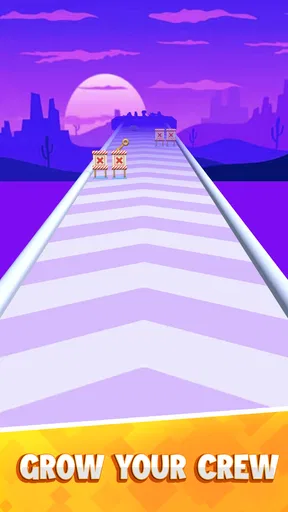

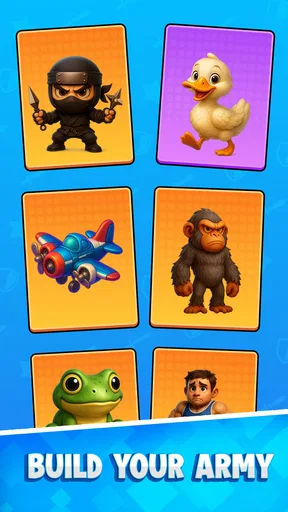
Our Review of Monster Merge Run
 Analysis by Appyee
I went into Monster Merge Run expecting a quick music-themed game built around a simple idea: combine powerful monsters, then guide the result through energetic challenges. That first impression is accurate, but the experience is more interesting when viewed as a routine rather than a one-time novelty. It is easy to understand, free to try, and light enough to fit into short sessions. The more important question is whether its central loop gives me a reason to return after the initial curiosity fades.
This is a music game from TSACom, listed for Teen players and available at no cost. It has already passed over one million installs, while its average sits at 3.7 from roughly 1.2 thousand ratings. Those figures suggest a game with a broad audience but also a mixed reception, which matches my own reaction: I enjoyed the immediate energy, yet I would not recommend it equally to everyone. It works best for players who like quick progress, monster collecting themes, and repeated challenge runs more than deep musical practice or a large strategic system.
What the first sessions get right
The strongest part of the opening experience is how quickly the premise communicates itself. Merging monsters gives the game an obvious action to focus on, and running through challenges adds movement and urgency instead of leaving the player with a purely menu-based collection screen. I did not need a long explanation to understand what I was supposed to pursue: build something stronger, then see how it performs when the pace picks up.
That clarity matters on a phone. I can imagine opening it while waiting for a bus, playing through a short attempt, and closing it without feeling that I have abandoned a complicated task halfway through. The structure suits small gaps in the day better than games that demand a long uninterrupted session. It also makes the game approachable for people who enjoy the feeling of upgrading a character but do not want a dense role-playing system.
The music category gives the action a different mood from a standard endless runner. Even when the mechanics remain straightforward, the presentation encourages me to react to rhythm and momentum rather than treating every obstacle as a dry checklist. I would not describe it as a replacement for a dedicated rhythm game, though. Players looking for precise note charts, musical performance, or a large library of songs should look elsewhere. Here, music supports the run-and-merge identity instead of being the entire challenge.
My most useful early tip is to avoid treating every merge as an automatic improvement. In a game built around combining monsters, the temptation is to merge immediately whenever the option appears. I found it more satisfying to pause briefly and consider whether the stronger result would help with the next challenge or simply make the current moment look better. That small habit turns the opening from button pressing into light decision-making, even if the overall system remains accessible.
A good fit for short, repeatable play
The game’s first-week appeal comes from the combination of three familiar pleasures: visible growth, forward movement, and quick restarts. A run gives me something immediate to do, while merging gives the session a sense of preparation and reward. This pairing is more effective than either idea alone. A collection game can feel static, and a runner can feel disposable; placing them together gives each action a reason to exist.
It is especially suitable for players who prefer learning by doing. Instead of asking me to understand a large set of rules before I begin, it lets the basic loop carry the explanation. That makes it a reasonable choice for a younger Teen audience, although the age label still means parents should decide whether the tone and repeated-play structure suit a particular player. I would also suggest trying it with notifications and other interruptions minimized, because short games lose some of their rhythm when the session is constantly broken.
The current version is 0.2.3, and that detail shapes my expectations. I see it as a game that is still establishing its identity rather than a fully mature music platform. The early version can be appealing precisely because the central idea feels uncluttered, but it also means long-term players should judge it by the quality of the core loop, not by the size of a hypothetical future roadmap. I would not install it expecting a huge, finished ecosystem from the start.
What remains after the novelty wears off
After the first burst of discovery, the important test is whether merging and running continue to feel connected. If I am only collecting stronger monsters without making meaningful choices during challenges, the loop can become mechanical. If the runs regularly make me reconsider how I prepare, the game has a better chance of becoming a habit. My experience sits between those two outcomes: the loop is pleasant enough to revisit, but its lasting value depends heavily on whether I enjoy repetition for its own sake.
That makes the game a better match for casual progression than for players who need constant variety. Someone who likes checking in, improving a setup, and attempting another challenge may find a comfortable rhythm here. Someone who wants each session to introduce a new mechanic, a new musical idea, or a dramatic change in strategy may feel the limits sooner. The game does not need to be endlessly complex to be enjoyable, but it does need to make repeated runs feel purposeful.
A realistic everyday use case is a short evening break after work or study. I can play one or two attempts without committing to a full campaign, use the merge step as a small planning moment, and stop when I feel finished. That is a genuine strength because the game does not require me to reorganize my day around it. The trade-off is that a short-session design can also make the experience feel interchangeable with other mobile games if the challenge stops giving me a reason to improve.
I would approach month-to-month play with a simple personal rule: keep it installed only while I am still making decisions rather than merely repeating the fastest familiar action. That is not a criticism of the concept; it is a practical way to protect the game’s value. If I notice that I am starting runs out of habit but no longer caring about the outcome, the game has probably completed its useful cycle for me. A free game does not need to become a permanent hobby to justify a download.
How it compares with familiar alternatives
Compared with a conventional endless runner, this game has more preparation and collection appeal. The monster merge layer gives me something to think about before the run, so success is not only about immediate reactions. However, a specialist runner will usually be the better choice for someone who values precise movement, score chasing, or highly polished obstacle mastery above all else.
Compared with a dedicated rhythm game, Monster Merge Run is more forgiving in spirit. I am not opening it primarily to test musical accuracy or memorize complex sequences. The music helps shape the atmosphere, while the monster and running elements carry the identity. Players who want songs to be the main content should choose a true rhythm-focused alternative; players who want a colorful progression game with musical energy may prefer this hybrid.
It also differs from a traditional merge puzzle. The merge action is not the whole experience, because the result is taken into a more active challenge. That gives the game a welcome sense of movement, but it may disappoint puzzle fans who enjoy slow board planning and carefully optimizing every space. In my view, the best audience is the overlap: people who like the satisfaction of combining units but want the reward to lead into a faster sequence.
The maintenance cost of keeping it in rotation
One advantage of the design is that it does not ask me to learn a large amount before each session. Once I understand the relationship between merging and running, returning is relatively simple. That lowers the mental maintenance burden. I do not need to rebuild my understanding every time I come back after a few days away, which is useful for a game intended to live in small pockets of free time.
There is another kind of maintenance, though: deciding whether the next attempt still has a purpose. Games based on repeated upgrades can quietly turn into routine checking. I recommend setting a clear goal before playing, such as testing a newly merged monster or seeing whether a different preparation changes the next run. Without that goal, the game’s actions can blur together, and the session may feel longer than it actually is.
For a phone with limited storage or a player who dislikes managing many games, the free entry point makes experimentation easy, but easy installation does not guarantee permanent value. I would keep it alongside other games only if its particular combination of monster progression and running feels distinct in my library. If I already have a favorite runner and a favorite merge game, this title needs to provide a different mood rather than simply duplicate both.
The Teen rating is also relevant to household use. I would not assume that a child’s interest in the colorful monster theme automatically makes it suitable for every younger player. Parents should look at the game directly and decide whether the action, presentation, and repeat-play pattern fit their expectations. For older players, the rating is unlikely to be a barrier, but it is still useful context when choosing a game for a shared device.
Where fatigue is most likely to appear
The main source of fatigue is repetition without a noticeable change in decision quality. Merging is satisfying when I feel that I am building toward a better run. It becomes less satisfying when the action is simply the required step before doing the same kind of challenge again. The game’s long-term appeal therefore rests less on its basic premise and more on how much variation I personally perceive in the outcomes.
The second friction point is the gap between its broad concept and the expectations created by the music label. A player may download it hoping for a full musical game and then discover that the musical identity is part of a larger monster-running structure. I think it is important to choose it for the hybrid experience, not for the promise of a conventional rhythm title. That expectation check can make the difference between a pleasant surprise and an immediate uninstall.
A third issue is that the simple entry point can work against depth. The same clarity that helps a new player begin can leave an experienced player wanting more layers. I would not recommend it to someone who needs extensive customization, elaborate tactics, or a long-form story to stay engaged. Its appeal is strongest when convenience and quick feedback matter more than complexity.
There is also a personal fatigue threshold to consider. I enjoyed playing in bursts, but I would be cautious about turning it into an all-day activity. Repeated runs can feel productive because the monster becomes stronger, yet progress alone is not the same as meaningful variety. Taking breaks helps me notice whether I am returning because I am interested or simply because the next upgrade is close.
Who should download it and who should pass
I would recommend this game to someone who wants a free mobile experience that combines light merging with active challenge runs. It is a particularly good fit for casual players, fans of monster-themed progression, and people who prefer sessions that can be completed in spare moments. The music framing adds personality without requiring the player to be a rhythm-game expert.
I would suggest passing if your priority is deep musical interaction. A specialist rhythm game will offer a clearer connection between sound and input. I would also skip it if you dislike repeated upgrade loops or if you need a strong narrative reason to continue. The game’s charm comes from its compact cycle, and that cycle may feel too familiar for players who want constant reinvention.
For families, I would treat the Teen classification as a prompt to check the experience rather than as a recommendation for younger children. For older players deciding whether it deserves permanent space, the answer depends on tolerance for repetition. The free price removes the financial risk of trying it, but your time is still valuable. Give it enough sessions to see whether the merge decision genuinely affects how you approach challenges, then make a deliberate choice about keeping it.
My long-term verdict
Monster Merge Run earns a place as a convenient short-session game, but I do not see it as an automatic long-term staple for every player. Its strongest qualities are the readable monster-merging premise, the active run structure, and the musical atmosphere that helps it stand apart from a plain progression game. I can recommend it to a friend who wants something easy to start and satisfying in brief bursts.
Its lasting value is more conditional. The game works when I set a small objective, make a thoughtful merge, and use the following challenge to test that choice. It loses momentum when I repeat the same actions without noticing a meaningful difference. That is why I would judge it by habit quality rather than by the excitement of the first download: does it give me a reason to return, or only a reason to tap through one more attempt?
With its current version at 0.2.3, I would keep expectations measured and focus on the experience that is available now. TSACom has a clear, approachable foundation, and the game can be enjoyable without demanding money or long sessions. Still, players seeking a deep music game, a highly technical runner, or a complex merge strategy title will likely find a better match elsewhere.
My final recommendation is to try it when you want a lightweight hybrid rather than a definitive game in any single category. If the first week leaves you looking forward to the next merge and the next challenge, it may become a pleasant part of your routine. If the novelty disappears as soon as the basic loop is familiar, uninstalling it is not a failure; it simply means the game delivered its best value as a short, accessible diversion.
Verdict
Strengths of Monster Merge Run
- Simple controls make it easy to start playing immediately.
- Quick levels are well suited to short gaming sessions.
- Merging mechanics add a satisfying sense of progression.
- Colorful visuals make the game appealing to casual players.
- Playable offline, making it convenient for travel or limited data.
Limitations of Monster Merge Run
- Gameplay may become repetitive after extended play.
- Progress can feel slow without optional purchases or rewards.
- Ads may interrupt the experience between levels.
- Limited strategic depth may disappoint experienced gamers.
- Device performance can vary on older phones.
Other Releases by TSACom
View All
Mini Soccer: Football Cup 2026
Casual4.6

Horror Beats: Scary Music
Music4.0
Similar Picks in This Category
View All
Tiles Hop Music & Ball Game
AMANOTES PTE. LTD.4.3

Magic Tiles 3™ - Piano Game
AMANOTES PTE. LTD.4.6

Real Piano
Bilkon3.7

Piano Game: Classic Music Song
Dream Tiles Piano Game Studio4.0

Smash Colors: Music Ball Rush
BADSNOWBALL HONGKONG LIMITED4.2

Piano Music Go-EDM Piano Games
Joy Journey Music Games4.5
Frequently Asked Questions
What is Monster Merge Run and how does the gameplay work?
Monster Merge Run is a casual running and merging game in which you guide monsters through obstacle-filled tracks while collecting characters and combining matching ones. Merging usually creates stronger or more valuable monsters, helping you overcome tougher sections and improve your final score. The controls are designed to be simple, but timing, lane changes, and choosing the right monsters can make a noticeable difference.
Is Monster Merge Run free to download and play?
Monster Merge Run is generally available as a free download, allowing players to start running and merging without paying upfront. However, free mobile games commonly include optional advertisements, in-app purchases, or both. These may provide bonuses, remove ads, or speed up progression. Before downloading, check the store listing for the current pricing, purchase details, and any region-specific differences.
Does Monster Merge Run require an internet connection?
The basic running and merging mechanics may work without a constant internet connection, which can make Monster Merge Run suitable for short offline sessions. Nevertheless, some features—such as advertisements, cloud saving, leaderboards, events, or reward claims—may require online access. Availability can also change after updates, so it is best to test the game offline after installation if offline play is important to you.
Are there advertisements or in-app purchases in Monster Merge Run?
Players should expect that Monster Merge Run may include advertising and optional in-app purchases, as is common with free-to-play casual games. Advertisements can appear between rounds or when claiming extra rewards, while purchases may offer currency, upgrades, or ad removal. The game can usually be enjoyed without spending money, but progression may feel slower if you choose not to watch ads or buy bonuses.
Is Monster Merge Run suitable for children and low-end devices?
Monster Merge Run uses colorful monster designs and straightforward controls, making it accessible to many younger and casual players. Parents should still review the store’s age rating, advertising practices, and purchase settings before allowing children to play. On older or low-end phones, performance may depend on available storage, memory, and system version; closing background apps can help reduce lag or crashes.
Play our best games!


